
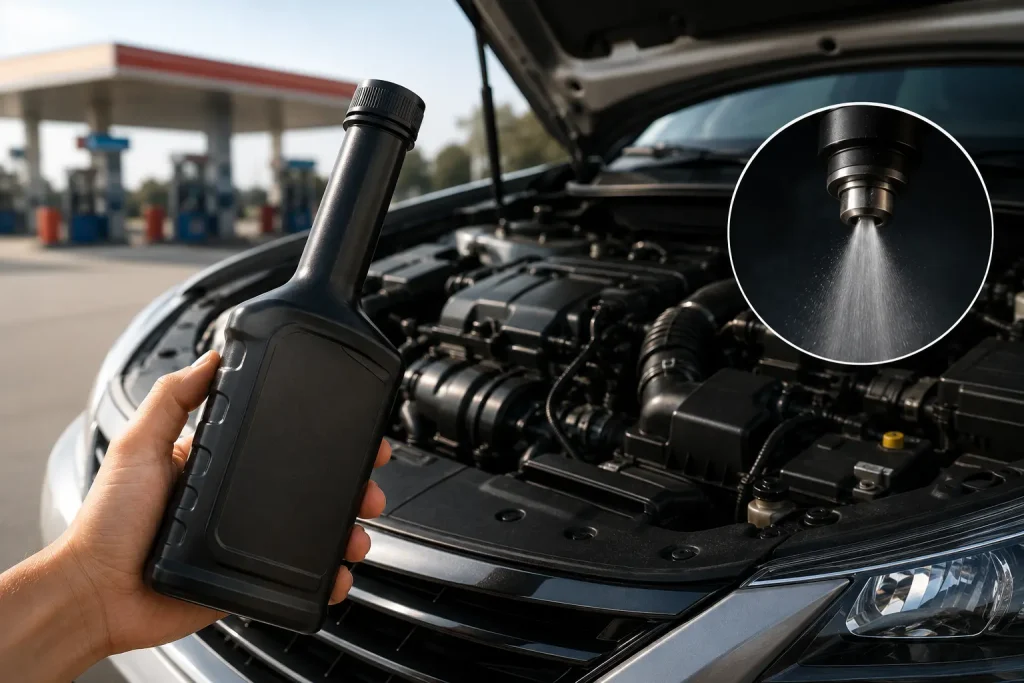
One customer recently arrived at our workshop convinced their engine was nearing the end of its life. The car had become noticeably slower to accelerate, fuel economy had dropped over the previous few months, and the engine didn’t feel as smooth as it once had. Naturally, the owner expected an expensive repair. Instead of replacing parts immediately, we carried out a complete inspection of the fuel system and engine. The diagnosis was far less dramatic, carbon deposits had built up around the fuel injectors, affecting how efficiently fuel was being delivered. After recommending a quality petrol cleaner alongside routine servicing, the engine’s performance improved noticeably over the following weeks without any major mechanical work.
Cases like this highlight an important point that many drivers overlook. A petrol cleaner isn’t a magic bottle that fixes every engine problem, but it also isn’t a marketing gimmick. When used for the right vehicle and at the right time, it can help remove harmful deposits that gradually reduce engine efficiency.
Drivers who regularly rely on petrol delivery in Dubai often ask whether adding a petrol cleaner during routine maintenance is worthwhile. The answer depends on your vehicle’s condition, mileage, driving habits, and maintenance history.
In this guide, we’ll explain what a petrol cleaner does, the signs your car may benefit from one, when it won’t help, and how to decide whether it’s a smart investment or simply an unnecessary expense.
What Is a Petrol Cleaner?
A petrol cleaner is a specially formulated fuel additive that mixes with your petrol and circulates through the fuel system while you drive. Its primary purpose is to dissolve or reduce carbon deposits that naturally build up inside components such as the fuel injectors, intake valves, and combustion chamber.
Over thousands of kilometres, tiny amounts of fuel residue can accumulate inside the engine. These deposits may disrupt the fuel spray pattern, reduce combustion efficiency, and affect how smoothly the engine runs. A quality petrol cleaner is designed to clean these areas gradually without requiring the fuel system to be dismantled.
It’s important to understand that a petrol cleaner is preventive maintenance, not a repair product. If your vehicle has damaged injectors, a failing fuel pump, or ignition problems, no additive can replace proper mechanical repairs. Think of it as helping a healthy engine stay efficient rather than bringing a severely neglected one back to life.
How Does a Petrol Cleaner Work?
When poured into the fuel tank, the cleaner mixes with the petrol and travels through the entire fuel system. As the treated fuel passes through the injectors and into the combustion chamber, detergents in the formula help loosen and remove carbon deposits that have accumulated over time.
A cleaner fuel injector can produce a finer and more consistent spray pattern. This allows fuel to mix more effectively with air, leading to more efficient combustion. As a result, some drivers notice:
- Smoother engine idling
- Better throttle response
- Improved acceleration
- Reduced hesitation during acceleration
- Better fuel economy in vehicles affected by deposit buildup
The improvements are usually gradual rather than immediate. If carbon deposits were causing the problem, you may notice smoother performance after driving through a full tank of treated fuel.
However, if symptoms persist after using a petrol cleaner, it’s likely that the issue lies elsewhere. Problems such as faulty spark plugs, worn ignition coils, clogged air filters, or failing fuel injectors require proper inspection and repair rather than another bottle of additive.
Signs Your Car May Benefit from a Petrol Cleaner
Not every petrol-powered vehicle needs a fuel additive. If your car is well maintained, uses quality fuel, and runs smoothly, adding a petrol cleaner too frequently is unlikely to provide noticeable benefits. However, there are situations where it may help restore normal performance.
Here are some common signs that carbon deposits could be affecting your fuel system:
- Reduced fuel economy without a clear reason
- Sluggish acceleration or poor throttle response
- Rough or uneven idling
- Minor hesitation when accelerating
- Higher mileage with no recent fuel system maintenance
- The vehicle is mainly driven on short trips where the engine rarely reaches full operating temperature
These symptoms don’t automatically mean your fuel injectors are dirty, but they are worth investigating. In our workshop, we always recommend diagnosing the cause first instead of assuming a bottle of petrol cleaner will solve every performance issue.
Modern vehicles are equipped with advanced engine management systems, so the same symptom can have several different causes. A blocked air filter, worn spark plugs, faulty sensors, or ignition problems can produce similar complaints. Using a petrol cleaner without identifying the real issue may delay necessary repairs.
If your vehicle is running normally and you’re simply looking to keep the fuel system clean, using a quality cleaner as part of your scheduled maintenance can be a sensible preventive measure.
When a Petrol Cleaner Won’t Help
One of the biggest misconceptions is that petrol cleaners can fix every engine problem. While they can remove certain carbon deposits, they cannot repair mechanical or electrical faults.
A petrol cleaner is unlikely to help if your vehicle has:
- A faulty fuel injector
- A failing fuel pump
- Worn spark plugs or ignition coils
- Vacuum leaks
- Engine compression problems
- A blocked fuel filter
- A check engine light caused by sensor failures
In these situations, professional diagnostics are far more valuable than repeatedly adding fuel additives.
Another important point is fuel quality. If your vehicle has been filled with contaminated or incorrect fuel, a petrol cleaner won’t remove water or other contaminants from the fuel tank. The fuel system must be inspected and cleaned appropriately before normal operation can resume.
Whether you’re filling up at a service station or using a trusted fuel delivery in Dubai, choosing high-quality fuel and following your manufacturer’s maintenance schedule remains the best way to keep your engine performing efficiently over the long term.