
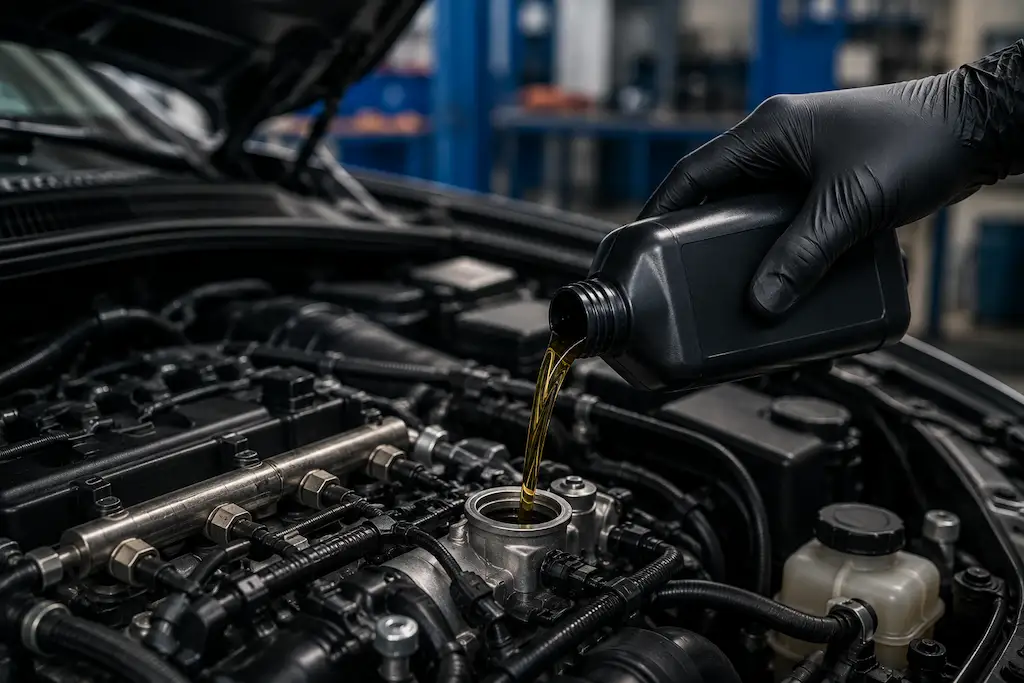
A question we hear surprisingly often isn’t Which petrol cleaner should I buy? it’s Will it damage my engine? The concern is understandable. Drivers are cautious about pouring any chemical into their fuel tank, especially when modern engines rely on precision fuel injectors, sensors, and emission control systems. Many worry that a petrol cleaner could do more harm than good or even void their vehicle’s warranty.
We recently spoke with a customer whose vehicle had crossed 120,000 kilometer. A friend had recommended using a petrol cleaner, while another warned it could damage the fuel injectors. Rather than relying on conflicting advice, we inspected the vehicle, reviewed its service history, and explained when a fuel additive is appropriate. Because the engine was well maintained and only showed minor carbon buildup, a reputable petrol cleaner was a safe recommendation. More importantly, we explained that the product wasn’t replacing proper maintenance, it was simply supporting it.
Questions like these highlight why there’s so much confusion around fuel additives. Used correctly, quality petrol cleaners are generally safe for modern petrol engines. Problems usually arise when the wrong product is used, instructions are ignored, or drivers expect a fuel additive to solve mechanical faults.
Whether you regularly refuel at a station or use petrol delivery in Dubai, understanding how petrol cleaners work and when they’re appropriate helps you make informed decisions about your vehicle’s maintenance.
How Do Petrol Cleaners Actually Work?
Petrol cleaners contain detergents and cleaning agents that travel through the fuel system as you drive. As the treated fuel passes through the fuel injectors, intake valves, and combustion chamber, these detergents help dissolve carbon deposits that naturally build up over time.
The goal isn’t to “repair” the engine but to restore cleaner fuel flow and more efficient combustion. When fuel injectors become partially restricted by deposits, they may no longer spray fuel evenly. This can reduce engine efficiency, affect throttle response, and increase fuel consumption.
A quality petrol cleaner helps by:
- Cleaning fuel injector deposits
- Reducing carbon buildup inside the fuel system
- Improving fuel atomization
- Supporting smoother combustion
- Helping maintain engine performance over time
However, it’s important to understand that petrol cleaners have limits. They work best as a maintenance product for engines affected by normal deposit buildup—not as a solution for damaged mechanical components.
If you’re unsure whether your vehicle would actually benefit from using one, read our guide on Petrol Cleaner: Does Your Car Actually Need One?, where we explain when these additives are worthwhile and when professional repairs are the better option.
Are Petrol Cleaners Safe for Modern Engines?
For the vast majority of modern petrol vehicles, the answer is yes.
Reputable petrol cleaners are specifically formulated to be compatible with modern fuel systems, including:
- Fuel injectors
- Fuel pumps
- Intake valves
- Oxygen sensors
- Catalytic converters
- Turbocharged petrol engines (where approved by the manufacturer)
Vehicle manufacturers and additive companies invest significant research into ensuring these products clean deposits without damaging engine components when used as directed.
In our experience, the biggest problems don’t come from the petrol cleaner itself, they come from improper use. Drivers sometimes add more than the recommended amount, mix several fuel additives together, or use products intended for diesel engines. These mistakes won’t usually destroy an engine overnight, but they can reduce effectiveness and create unnecessary risks.
Choosing a trusted brand, following the instructions on the bottle, and using the cleaner only at the recommended intervals are the safest ways to protect your engine while enjoying the benefits of a cleaner fuel system.
Common Myths About Petrol Cleaners
There are plenty of opinions about fuel additives, but not all of them are based on facts. Here are some of the most common myths—and what drivers should really know.
Myth 1: Petrol cleaners damage fuel injectors
This is one of the biggest misconceptions. Quality petrol cleaners are designed to clean fuel injectors, not damage them. When used correctly, they help remove deposits that can affect spray patterns and fuel delivery.
Myth 2: More petrol cleaner means better results
Adding twice the recommended amount won’t clean your engine twice as well. Overusing any fuel additive is unnecessary and doesn’t improve its effectiveness. Always follow the dosage instructions provided by the manufacturer.
Myth 3: Petrol cleaners can repair engine problems
A petrol cleaner is a maintenance product, not a repair solution. It cannot fix worn spark plugs, failing fuel pumps, faulty sensors, injector failures, or internal engine damage. If your vehicle has a mechanical fault, it should be diagnosed and repaired professionally.
Myth 4: Every petrol car needs a cleaner every month
Not necessarily. Many modern vehicles that receive regular servicing and are fueled with high-quality petrol may only need a cleaner occasionally, if at all. Usage depends on driving conditions, mileage, and the recommendations in your owner’s manual.
When Should You Avoid Using a Petrol Cleaner?
Although petrol cleaners are generally safe, there are situations where using one isn’t the right solution.
Avoid relying on a petrol cleaner if:
- Your vehicle has an active check engine light that hasn’t been diagnosed.
- The engine is misfiring due to faulty ignition or mechanical components.
- The fuel system has a leak or damaged parts.
- Your vehicle requires repairs rather than routine maintenance.
- The product is intended for diesel engines instead of petrol engines.
If your car suddenly develops rough idling, poor acceleration, excessive smoke, or unusual engine noises, it’s better to identify the root cause before adding any fuel additive. Treating symptoms without diagnosing the problem can delay necessary repairs.
A petrol cleaner is most effective when used as part of preventive maintenance not as a substitute for professional servicing or mechanical repairs.
How to Use a Petrol Cleaner Safely
Using a petrol cleaner correctly is just as important as choosing the right product. Following the manufacturer’s instructions helps you get the intended cleaning benefits while avoiding unnecessary risks.
Here are a few simple best practices:
- Choose a petrol cleaner from a reputable manufacturer.
- Make sure the product is designed specifically for petrol engines.
- Add only the recommended amount never exceed the stated dosage.
- Pour the cleaner into the fuel tank as directed, usually before refueling so it mixes evenly with the petrol.
- Use the product only at the recommended service interval.
- Continue following your vehicle’s regular maintenance schedule.
It’s also worth remembering that a petrol cleaner works gradually as the treated fuel circulates through the system. Don’t expect instant results after driving just a few kilometers.
Signs a Petrol Cleaner May Be Helping
If carbon deposits were affecting your fuel system, you may notice gradual improvements after using a quality petrol cleaner. Every vehicle is different, and the results depend on the condition of the engine and the level of deposit buildup.
Some drivers report:
- Smoother engine idle
- Improved throttle response
- More consistent acceleration
- Reduced hesitation during driving
- Better fuel efficiency over time
- Easier engine starts
If none of these improvements occur or if your vehicle’s performance continues to decline, the issue is likely unrelated to fuel deposits. In that case, a professional inspection is the safest next step.
Regular servicing, quality fuel, and reliable fuel delivery in Dubai remain the best long-term strategy for maintaining engine performance. A petrol cleaner should be viewed as a supporting maintenance product, not a replacement for proper vehicle care.
Frequently Asked Questions
Can a petrol cleaner damage my engine?
When you use a reputable petrol cleaner according to the manufacturer’s instructions, it is generally safe for petrol engines. Problems are more likely to arise from using the wrong product, exceeding the recommended dosage, or attempting to fix a mechanical issue with a fuel additive.
Are petrol cleaners safe for high-mileage cars?
Yes. High-mileage petrol vehicles can often benefit from a quality petrol cleaner because carbon deposits naturally accumulate over time. However, if the engine has underlying mechanical problems, those should be diagnosed and repaired first.
Can petrol cleaners damage fuel injectors?
No. Their purpose is to help remove deposits from fuel injectors and improve fuel flow. When used correctly, they are formulated to clean—not damage—fuel system components.
Is it safe to use a petrol cleaner in every tank?
No. Most manufacturers recommend using petrol cleaners only at specific service intervals. Using them with every tank of fuel is usually unnecessary unless the product specifically instructs otherwise.
Will using a petrol cleaner void my car’s warranty?
Generally, no. Using a reputable fuel additive according to the manufacturer’s directions does not usually affect your warranty. However, it’s always a good idea to review your vehicle’s owner’s manual and warranty terms if you have concerns.
Conclusion
Petrol cleaners have earned a reputation for being either miracle products or harmful chemicals, but the reality lies somewhere in between. When you choose a high-quality product and use it as directed, petrol cleaners are generally safe for modern petrol engines and can help reduce carbon deposits that develop through normal driving.
What they can’t do is repair worn components, fix mechanical faults, or replace routine servicing. Understanding this difference allows you to use fuel additives as part of a sensible maintenance plan rather than expecting them to solve every engine problem.
If you’re still unsure whether your vehicle actually needs a fuel additive, start by reading our guide on Petrol Cleaner: Does Your Car Actually Need One?, which explains when these products are beneficial and when professional diagnostics are the better choice.
Combined with regular servicing, quality fuel, and dependable fuel delivery in Dubai, informed maintenance decisions can help keep your petrol engine running smoothly for years to come.