Khalid’s Range Rover was running perfectly until one Tuesday morning. He filled up at an unfamiliar petrol station near the airport, and within days, his engine started misfiring. The check engine light came on, followed by stalling at traffic lights. He spent AED 2,500 on diagnostic tests, expecting a major transmission problem. The result? Contaminated fuel. His injectors were clogged, his fuel filter was damaged, and sediment had accumulated in the fuel tank. What should have been a routine refueling had introduced contamination that nearly destroyed his engine, all because he didn’t realize how important fuel quality is.
For vehicle owners who rely on petrol delivery in Dubai, fuel quality and proper handling are just as important as convenience. Your vehicle’s engine is precisely engineered machinery that depends on clean, quality fuel to operate correctly. Contaminated or poor-quality petrol doesn’t just reduce performance; it can cause serious and expensive engine damage that may take weeks to repair. Understanding what fuel contamination looks like, how it can damage your engine, and how to prevent it is essential for every vehicle owner in the UAE.
What Is Contaminated Petrol?
Contaminated petrol isn’t always obvious. It doesn’t necessarily look dirty or smell different, yet it contains particles, water, or impurities that have no place in your fuel system. These contaminants enter fuel during storage, transportation, or handling at petrol stations. In the UAE’s extreme heat and humidity, contamination risks increase significantly because moisture accumulation in storage tanks becomes inevitable.
How Contaminated Petrol Damages Your Engine
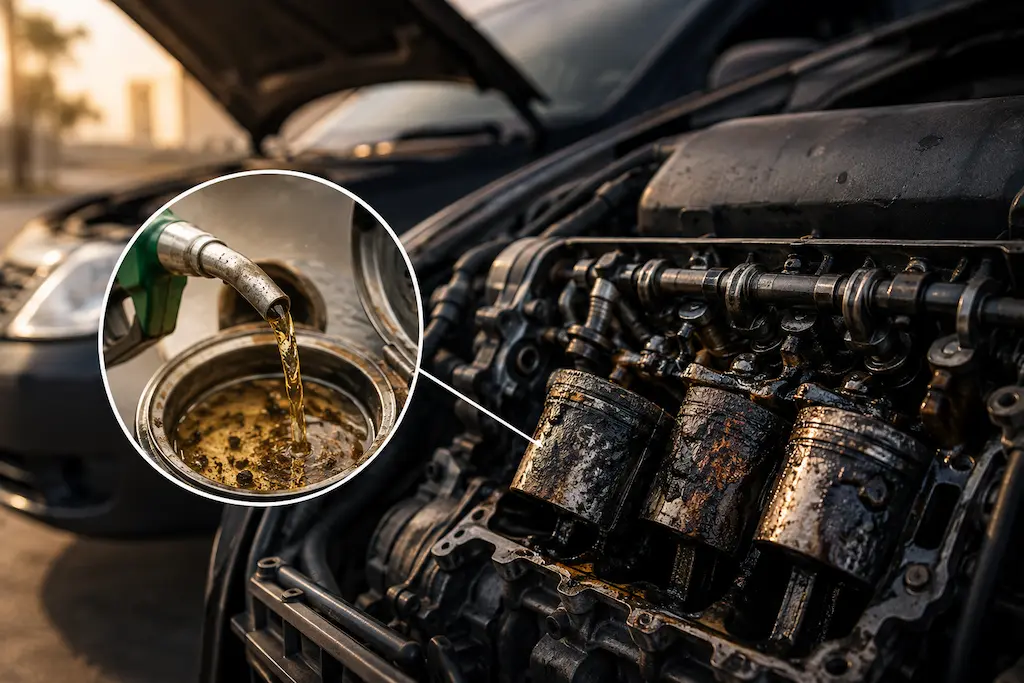
Understanding the damage mechanism helps you recognize problems early. When contaminated fuel enters your fuel injectors, the particles can lodge in the tiny nozzles designed to spray precise amounts of fuel. Your fuel filter catches large particles, but fine contaminants slip through, accumulating inside injectors over time. This reduces spray pattern precision, causing incomplete combustion.
Water in contaminated fuel is particularly damaging. In your fuel tank, water separates from petrol and settles at the bottom. When your fuel pump draws from the tank’s lowest point especially when your tank is nearly empty, it pulls water-contaminated fuel. Water doesn’t burn like petrol; it causes rust formation inside the engine, cylinder corrosion, and valve damage. Microbial growth feeds on the water-fuel interface, creating biofilm that clogs fuel lines and injectors.
Sediment accumulation in your fuel system creates multiple problems. It clogs fuel filters, reducing fuel flow and causing your engine to run lean (insufficient fuel). It scratches fuel pump internal components, accelerating wear. It settles in your fuel tank, requiring expensive professional cleaning. Over time, the damage becomes expensive and extensive.
Signs Your Engine Has Contaminated Fuel
Recognizing contamination early prevents catastrophic damage. Start by paying attention to your engine’s behavior. Rough idling at traffic lights, where your engine shakes or sounds uneven, often indicates fuel system issues. Hesitation during acceleration, where your car seems sluggish responding to throttle input, suggests injector clogging. Stalling while driving, particularly at low speeds, means your engine isn’t receiving clean fuel consistently.
Warning signs also appear through performance changes:
- Check engine light comes on (triggered by fuel system sensors)
- Reduced fuel economy (your engine works harder with contaminated fuel)
- Black smoke from exhaust (unburned particles being expelled)
- Difficulty starting, especially cold starts
- Engine knocking or pinging sounds
- Fuel smell in the cabin or at the exhaust
Some contamination problems develop gradually over weeks. Other times, particularly bad fuel causes immediate issues. The important thing is recognizing these signs early and addressing them before permanent damage occurs.
The Cost of Engine Damage From Contaminated Fuel
The financial impact of contaminated fuel damage is significant. Fuel injector cleaning or replacement costs AED 800–2,000 depending on severity. Fuel pump replacement ranges from AED 1,500–3,500. Fuel filter replacement is usually AED 200–400, but if contamination damaged your fuel lines, expect additional costs. Complete fuel system cleaning can exceed AED 3,000. In serious cases, engine repairs for corrosion or valve damage can reach AED 8,000–15,000.
Compare these costs to preventive measures consistently purchasing quality fuel costs virtually nothing extra but saves thousands in repair bills. This is why fuel quality matters so much.
How to Prevent Contaminated Fuel Damage
The most effective prevention is purchasing fuel from reputable sources. Choose petrol stations from major brands with established quality standards and regular tank maintenance protocols. Avoid unfamiliar or poorly maintained stations, particularly those showing signs of age or neglect. Brand reputation exists for a reason major petrol suppliers invest in quality control.
Keep your fuel tank above one-quarter full whenever possible. When your tank runs very low, you draw from the bottom where sediment and water accumulate. Maintain a habit of refueling at consistent intervals rather than running your tank nearly empty before filling. This simple practice prevents drawing contaminated fuel from the tank bottom.
Regular fuel filter replacement is your engine’s defense against fine contamination. Change your fuel filter according to manufacturer recommendations, typically every 15,000–30,000 kilometers. A fresh fuel filter catches particles before they reach your injectors. Fuel system cleaning every 60,000 kilometers helps remove accumulated deposits.
What to Do If You Suspect Contaminated Fuel
If your engine shows signs of contamination, address it immediately. Have your vehicle professionally diagnosed to rule out other issues. A mechanic can perform fuel system diagnostics, fuel analysis tests, and injector inspections to confirm contamination. Early intervention is cheaper than waiting for symptoms to worsen.
If you recently filled up at a new petrol station and symptoms appeared shortly after, note the station and date. If multiple vehicles show similar symptoms after using the same station, the petrol station itself may have contamination issues report this to the relevant authorities.
Treatment options include fuel system cleaning (flushing and clearing deposits), fuel injector cleaning or replacement, and fuel filter replacement. In severe cases, a complete fuel tank cleaning is necessary. Professional mechanics can assess your specific situation and recommend appropriate treatment.
Does premium fuel really matter?
Use quality fuel consistently. Yes, premium petrol costs more, but the difference amounts to a few dirhams per tank while preventing thousands in potential damage. Learn more about whether premium petrol actually improves your car’s performance and how quality fuel impacts engine longevity. For concerned owners, fuel delivery services from trusted suppliers ensure consistent quality without the risk of contaminated station fuel, you get verified, quality fuel delivered directly to your vehicle.
Frequently Asked Questions
Can I mix contaminated fuel with clean fuel and dilute the problem?
A: No. Adding clean fuel doesn’t remove existing contamination. Particles remain in your system, and water still causes damage. You must address contamination through cleaning or replacement, not dilution.
How can I tell if petrol station fuel is contaminated?
You can’t visually inspect fuel at the pump. This is why reputation matters. Stick with major brands. If you experience issues after visiting a new station, the fuel quality may have been compromised.
Does premium petrol have better quality protection than regular?
Premium petrol from reputable suppliers generally has better quality control and additives than budget options. However, the brand and station reputation matter more than premium vs. regular designation.
How often should I clean my fuel system?
Every 60,000 kilometers as preventive maintenance. If you suspect contamination, get professional inspection immediately rather than waiting.
Can contaminated fuel damage a new car?
A: Yes. Engine type doesn’t matter modern fuel injection systems are more sensitive to contamination than older engines, making newer cars potentially more vulnerable.
Is contaminated fuel more common in certain seasons?
Yes. In UAE summer months, extreme heat and condensation in storage tanks increase water contamination risks. Winter months (mild by global standards) see lower contamination rates.
Conclusion
Contaminated petrol can absolutely damage your engine often severely and expensively. The good news is that this damage is largely preventable through smart fuel purchasing decisions. Choosing reputable fuel suppliers, maintaining adequate fuel tank levels, and performing regular fuel system maintenance can help protect your engine from contamination.
At Fuel Delivery, we understand the importance of fuel quality. Our fuel delivery in Dubai service brings premium, tested petrol directly to your location, providing a convenient alternative to relying solely on unfamiliar petrol stations. We maintain strict quality control protocols, use properly maintained delivery vehicles, and ensure that our fuel meets applicable UAE standards.
For more information about protecting your engine, explore our guides on fuel system maintenance and the importance of consistent fuel quality. Your engine’s longevity depends on the fuel it consumes, so make quality a priority.