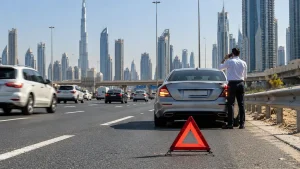
I’ve been managing the service of fuel delivery in Dubai for seven years now, and I can tell you: Tuesday mornings are brutal. About a month ago, I got a call from a driver named Fransic Mamasabulod somewhere between Al Quoz and Deira. His voice was calm, but tense. He’d miscalculated the distance, skipped a few fuel stations thinking he’d top up later, and now his engine was sputtering every few seconds. He was stuck in moving traffic, with no safe exit nearby, and genuinely worried the car would die in the middle of the road.
What struck me wasn’t the panic in his voice. It was the logic of his decision. He could have called a tow truck. He could have abandoned the car and taken a taxi. But he chose roadside fuel delivery because he understood something: a working car stuck on the shoulder is safer than waiting hours for roadside assistance.
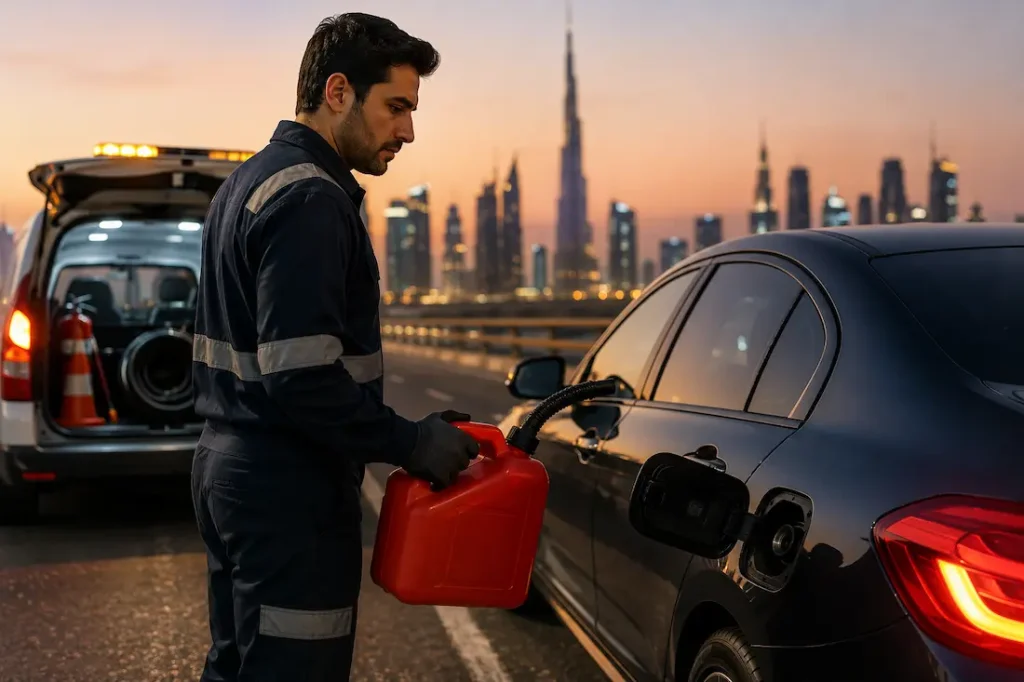
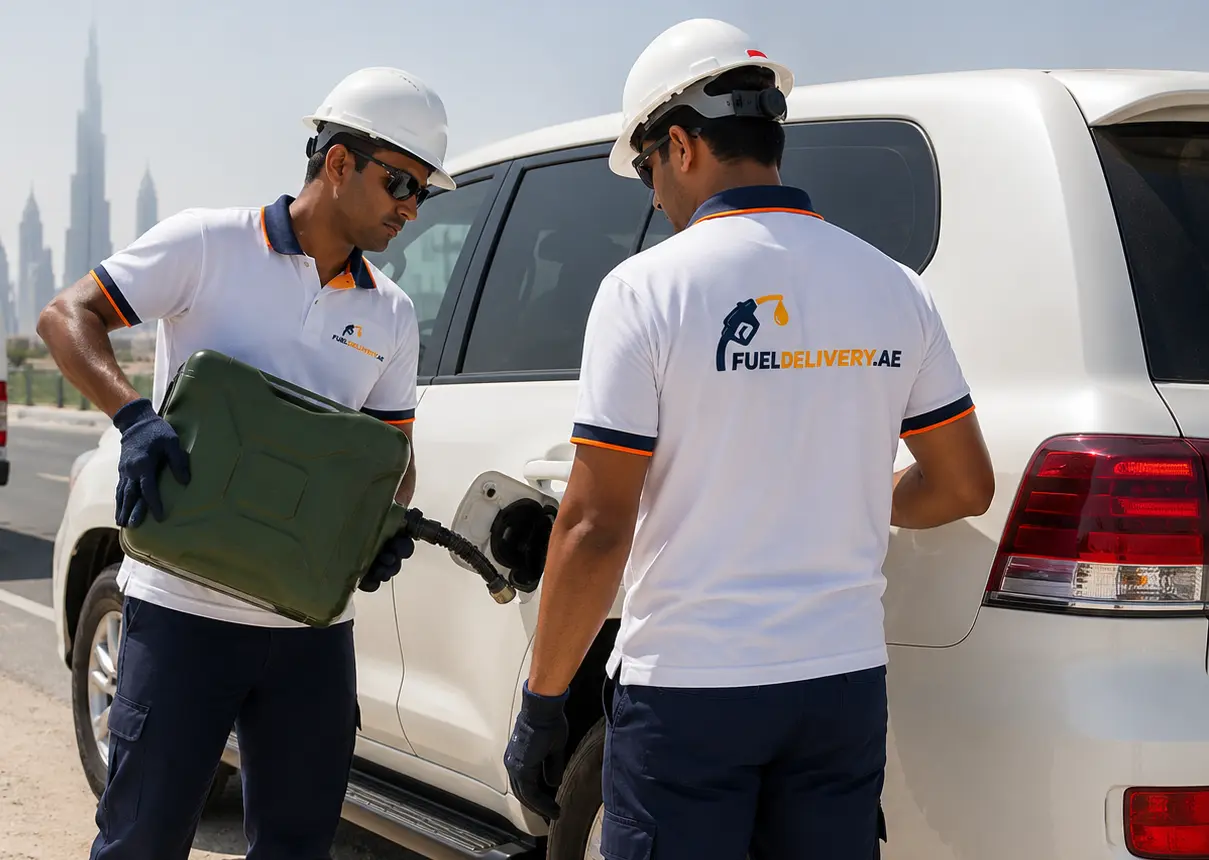
I dispatched one of our senior technicians, who’d handled hundreds of these situations. When he arrived 42 minutes later, he did what he always does: checked the fuel door area for leaks, confirmed no visible fuel system damage, and filled the tank from an approved container with proper equipment. No shortcuts. No rushing. Fifteen minutes later, Fransic was back on the road and made his 2 PM meeting.
But here’s what he asked me when he called back to pay: “Is this actually safe? I’ve never done this before.”
That question stuck with me. Because in seven years of dispatching hundreds of fuel deliveries across Dubai on Sheikh Zayed Road at 2 AM, in parking lots during sandstorms, to stranded families on the E11, I realized most drivers don’t actually know if roadside fuel delivery is safe. They just know they need it.
How Does Fuel Delivery Work?
Here’s how it works in practice:
You call or use an app to request delivery. A trained technician is dispatched to your exact location using GPS. The technician arrives in a clearly marked vehicle carrying approved fuel containers. They inspect your vehicle’s condition, ensure it’s safe to proceed, and fill your tank using proper equipment. You pay the technician and continue driving.
In Dubai, this service operates round-the-clock because traffic accidents and breakdowns don’t follow business hours. Whether you’re stranded on the E11, near the airport, or in a residential area, help is available within 30–60 minutes depending on traffic.
Is It Safe?
Yes, when you use a licensed, professional service.
From our experience helping thousands of drivers across Dubai, safety depends on three critical factors:
1. Using a Reputable Service Provider
Licensed operators in Dubai follow strict safety regulations set by the UAE Ministry of Energy and the Dubai Municipality. They carry:
- Proper fuel storage containers (never loose cans)
- Fire safety equipment
- Insurance coverage
- Trained technicians
Avoid unlicensed providers offering “cheap” service from social media. These often use unsafe containers, uninsured vehicles, and untrained staff.
2. Your Vehicle’s Condition
A professional technician will assess your car before delivery. Safety concerns include:
- Electrical faults: A malfunctioning battery or alternator near a fuel tank is risky
- Fuel system leaks: Visible fuel odors or leaks require repair, not just refueling
- Engine temperature: An overheating engine should cool before refueling
- Accident damage: If you’ve been in a collision, have your fuel system inspected
Our technicians are trained to spot these issues and will recommend professional repairs when needed.
3. Your Location and Surroundings
The safest locations for delivery are:
- Well-lit areas
- Flat, stable ground
- Away from foot traffic
- In daylight when possible
Why Drivers Run Out of Fuel
Understanding the causes helps you avoid emergencies:
- Malfunctioning fuel gauges: Many cars in the region experience gauge failures, showing half a tank when you’re nearly empty.
- Underestimating distances: Dubai’s scale is deceptive. A drive to the airport or a desert location can use more fuel than expected.
- Traffic delays: Heavy traffic on Sheikh Zayed Road or during peak hours burns extra fuel sitting idle.
- New driver unfamiliarity: Expat drivers new to the region often misjudge fuel station locations.
- Vehicle maintenance neglect: A failing fuel pump or leak causes unpredictable fuel loss.
- Wrong fuel type selection: Filling with premium when your car needs regular, or vice versa, can mask consumption issues.
How to Request Service Safely
Follow these steps to ensure a safe experience:
Step 1: Stay Calm and Pull Over Safely
Move to the side of the highway or parking area. Turn on hazard lights. Avoid sudden maneuvers that might cause accidents.
Step 2: Call a Licensed Provider
Contact a professional service with good reviews. Avoid responding to unsolicited offers from strangers.
Step 3: Provide Accurate Location Information
Use landmarks: “Near the Dubai Mall,” “On Sheikh Zayed Road near Exit 45,” or share your GPS pin via app. Accuracy matters for arrival time.
Step 4: Wait in a Safe Location
Stay inside your air-conditioned vehicle with doors locked, or stand safely away from traffic. Don’t accept fuel from anyone offering to help from an unmarked vehicle.
Step 5: Verify the Technician’s Credentials
Ask for ID, service company badge, and vehicle registration. Professional services provide proof of identity.
Step 6: Observe the Delivery Process
Watch the technician use approved containers and equipment. They should not allow smoking or open flames during delivery.
Step 7: Confirm Your Vehicle is Safe to Drive
Ask the technician if your vehicle appears mechanically sound before driving away. If they mention concerns, have it inspected before long trips.
What to Expect When Technicians Arrive
Professional service should feel organized and safe.
A properly trained technician will:
- Greet you professionally and introduce themselves
- Ask about your vehicle’s symptoms (won’t start? sounds odd?)
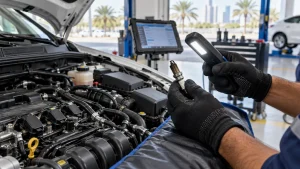
- Inspect the area around your fuel door for leaks or damage
- Check your engine compartment for obvious faults
- Bring approved fuel containers (never plastic bottles)
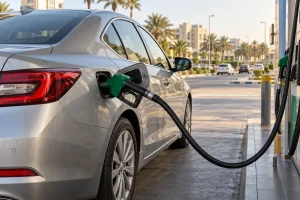
- Use a fuel pump nozzle suitable for your vehicle’s filler neck
- Fill your tank carefully without splashing
- Provide a receipt with service details
- Confirm your vehicle starts safely before leaving
Red flags to watch for:
- Technician rushing the process
- Using non-standard containers (soda bottles, buckets)
- Smoking or using open flames nearby
- No proof of company credentials
- Asking for payment in advance via risky methods
- Ignoring visible vehicle damage or fuel leaks
If something feels unsafe, politely decline service and call another provider.
Safety Features of Professional Services
Licensed operators include multiple safety measures:
| Safety Feature | What It Does |
|---|---|
| Approved Storage Containers | Specially designed for fuel transport with sealed caps and proper ventilation |
| Fire Extinguishers | Mounted in delivery vehicles and carried by technicians |
| GPS Tracking | Allows dispatch to send help if a vehicle breaks down |
| Driver Training | Technicians complete safety certification in fuel handling |
| Insurance | Liability coverage protects you if anything goes wrong |
| Regular Vehicle Inspections | Delivery vans are checked monthly for leaks and mechanical issues |
| Fuel Quality Testing | Professional services deliver RON 91 and RON 95 petrol that meets UAE standards |
| Communication | Real-time updates let you know when the technician is arriving |
These features aren’t luxuries, they’re legal requirements for licensed operators.
Common Mistakes That Lead to Fuel Emergencies
From thousands of roadside calls, we’ve identified preventable mistakes:
1. Ignoring the Fuel Gauge:
Don’t assume your gauge is accurate. When it hits 1/4 tank, find a fuel station rather than pushing it further.
2. Not Knowing Your Vehicle’s Consumption:
A luxury SUV burns more fuel than a sedan. Calculate your vehicle’s fuel consumption (liters per 100 km) and plan accordingly.
3. Skipping Fuel Station Visits on Long Trips:
If you’re driving to Mushrif, the desert, or toward Abu Dhabi, refuel before leaving the city. Stations become sparse outside Dubai.
4. Neglecting Vehicle Maintenance:
A clogged fuel filter or failing fuel pump wastes fuel and creates emergencies. Service your vehicle every 10,000 km.
5. Driving with Known Fuel System Problems:
Fuel leaks, strong fuel smells, or difficulty starting are warnings. Fix them before they strand you.
6. Trusting Unfamiliar Routes Without Fuel Prep:
New areas may have unexpected distances between fuel stations. Always start with a full tank.
7. Assuming Night Driving Uses Less Fuel:
Heavy night traffic and using AC still burns fuel rapidly. Don’t drive at night on low fuel.
Frequently Asked Questions
Is roadside fuel delivery legal in Dubai?
Yes, it’s completely legal when provided by licensed services. Check with the Dubai Municipality or ask the service provider for their business license.
Can your service handle diesel vehicles?
Our operations focus on petrol vehicles only (RON 91 and RON 95). Diesel requires specialized equipment and different training. Some commercial fuel companies serve diesel vehicles separately.
What should I do if I run out of fuel on the highway?
Turn on hazard lights immediately. Coast to the shoulder or exit safely. Call for roadside assistance rather than walking for a fuel station. Highway walking is dangerous.
How do I verify a service provider is legitimate?
Ask for their business registration number, verify with Dubai Municipality, check Google reviews, and confirm they carry proper insurance. Legitimate providers have no problem providing these details.
Will running out of fuel damage my engine?
No. Simply running out of fuel doesn’t damage most modern engines. However, if you run it completely dry regularly, it can stress the fuel pump over time.
How long does service typically take?
Response time is typically 30–60 minutes depending on your location and current traffic. Central Dubai areas are usually served within 30 minutes. The actual delivery takes 15–20 minutes once the technician arrives.
Conclusion
Roadside fuel delivery in Dubai is safe, legal, and increasingly necessary in a city where traffic, malfunctioning gauges, and unexpected distances can strand drivers at any time.
The key to a safe experience is choosing a licensed, professional service with proper insurance, trained technicians, and approved equipment. While it costs more than a fuel station visit, it’s an invaluable service when you’re stranded especially if you’re alone or traveling with children.
Our best advice: Don’t run out of fuel. Check your gauge regularly, refuel early on long trips, and service your vehicle so its fuel system works reliably. But when emergencies happenvand they do know that professional help is available 24/7.
Stay safe on Dubai’s roads.