You return to your car after an afternoon appointment in Dubai. The cabin feels like an oven, so you switch on the AC and wait for the air to cool. Later that week, you notice the petrol gauge dropping faster than expected. Before arranging fuel delivery in Dubai, you might wonder how much of that extra consumption comes from keeping your car comfortable.
Air conditioning increases petrol consumption because removing heat from the cabin requires energy. However, the difference varies with your vehicle, the weather, journey length and how you operate the system. Understanding these factors can help you manage fuel use without sacrificing comfort.
Why Does Car Air Conditioning Use Petrol?
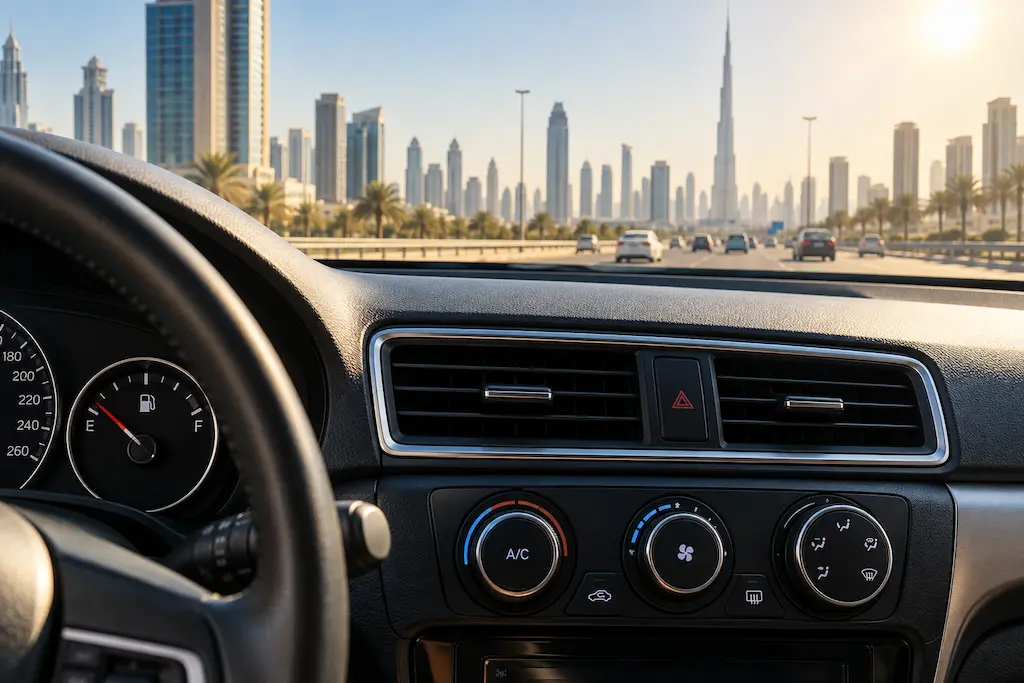
In most conventional petrol cars, the engine drives the air-conditioning compressor through a belt. The compressor circulates refrigerant, allowing the system to remove heat from the cabin. When it operates, the additional load means the engine needs more energy and therefore more petrol.
Some vehicles have electrically driven compressors. These also require energy, although their effect on petrol consumption depends on the vehicle’s powertrain and how that electricity is supplied.
Is the Cabin Fan Responsible for Higher Fuel Use?
The fan moves air through the vents, while the compressor enables cooling and dehumidification. Although the fan uses electricity, increasing its speed does not produce a matching percentage increase in petrol consumption. The compressor’s workload and the amount of heat entering the cabin are important factors.
How Much Does AC Affect Petrol Consumption?
There is no fixed percentage that applies to every car. FuelEconomy.gov, administered for the U.S. Department of Energy and Environmental Protection Agency, reports that AC can reduce a conventional vehicle’s fuel economy by more than 25% under very hot conditions, particularly on short trips. This is a condition-specific finding, rather than an expected result for every journey in Dubai.
A reduction in fuel economy is also different from the same percentage increase in fuel consumption. The following hypothetical calculation shows how the measurements relate:
| Measurement | Starting figure | After a 25% reduction in fuel economy |
| Distance travelled per liter | 12 km/L | 9 km/L |
| Petrol consumed per 100 km | 8.3 liters | 11.1 liters |
| Additional petrol per 100 km | – | Approximately 2.8 liters |
This example illustrates the calculation; it does not predict your car’s consumption. To establish your own figures, compare fuel used over several refills while considering differences in traffic, routes and weather.
Why AC Can Have a Greater Impact in Dubai
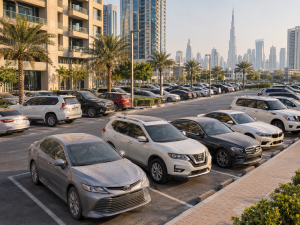
A car parked in direct sunlight accumulates heat in its seats, dashboard and other interior surfaces. Cooling that cabin requires more work initially than maintaining a comfortable temperature once the interior has cooled.
Your driving routine also affects the result. Several short journeys with outdoor parking between stops can involve repeated cooling periods, while waiting with the engine running consumes petrol without adding distance.
| Driving situation | Effect on cooling demand or consumption |
| Starting after parking in direct sunlight | More accumulated cabin heat needs to be removed |
| Making repeated short trips | Initial cooling can occupy a large share of each journey |
| Waiting with the engine and AC running | Fuel is consumed while the car remains stationary |
| Covering short distances in heavy traffic | Cooling continues while relatively few kilometers are travelled |
These conditions help explain why two weeks of driving can produce different fuel figures in the same vehicle. For a broader explanation of measurement and driving habits, read our guide to car fuel consumption in Dubai.
Is Opening the Windows Better Than Using AC?
Briefly opening the windows can release trapped hot air when you first enter the car. At higher speeds, however, open windows increase aerodynamic drag, which can also affect fuel economy. Official guidance recommends ventilating a hot cabin briefly and using AC at highway speeds.
There is no universal speed at which one option becomes more economical for every vehicle. Consider the temperature, road conditions and your comfort, and close the windows once you begin cooling the cabin properly.
How to Reduce AC-Related Petrol Consumption
You can reduce unnecessary cooling demand through a few practical habits. The aim is to help the system maintain a comfortable cabin without repeatedly removing avoidable heat.
- Reduce heat while parked: Choose shaded parking where available and use a windscreen sunshade. This limits heat entering the cabin before your next journey.
- Release trapped hot air: Briefly ventilate the interior when you return, then close the windows so the AC can cool the cabin effectively.
- Avoid prolonged stationary cooling: Once you can drive comfortably and safely, avoid unnecessary waiting with the engine running. Most AC systems cool more effectively while the vehicle is moving.
- Use recirculation appropriately: After ventilating the cabin, recirculation can reduce the need to cool incoming hot outside air. Follow your vehicle’s instructions and adjust the settings if windows mist.
- Select a comfortable temperature: With automatic climate control, avoid choosing a colder target than you need. Let the system manage the cabin temperature.
- Investigate weak cooling: If airflow or cooling performance deteriorates, arrange an inspection rather than repeatedly adjusting the controls.
Parking in shade, airing out the cabin and avoiding unnecessary idling are consistent with official hot-weather fuel-economy guidance.
When Higher Petrol Consumption Needs Further Investigation
Air conditioning should not automatically take the blame for a sudden or persistent increase. More traffic, lower tyre pressures, frequent short journeys and mechanical problems can also affect consumption. Warning lights, rough running or a noticeable change in performance deserve attention.
Measure consumption in liters per 100 km across several refills rather than judging it only by the amount you pay. For a structured approach to checking the cause, see our guide to why your car is suddenly using more petrol than before.
Plan Refueling Around Your Driving Routine
Air conditioning is an everyday part of driving comfortably in Dubai. Reducing cabin heat before departure and avoiding prolonged idling can help manage its effect on fuel use. Check your fuel level before journeys involving frequent stops, and consider petrol delivery in Dubai when you need to arrange refueling.
Frequently Asked Questions
Does Car AC Consume Petrol While the Vehicle Is Stationary?
Yes, a conventional petrol car uses fuel whenever its engine is running, including while parked. Operating the AC adds cooling demand during that time, so extended waiting can increase fuel consumption without increasing the distance travelled.
Why Does AC Affect Fuel Economy More on Short Trips?
The initial cooling period can occupy a large proportion of a short journey, especially after parking in direct sunlight. If you make several stops and the cabin heats up between them, the system must repeat that cooling process.
Does Turning the AC Off Save Petrol?
Turning off the compressor can reduce cooling-related energy demand, but the saving varies by vehicle and conditions. Keep the cabin comfortable and the windows clear, and focus on reducing unnecessary heat and idling rather than tolerating uncomfortable temperatures.
Does a Higher Fan Speed Always Mean More Petrol Consumption?
No, fan speed alone does not determine the AC system’s effect on petrol consumption. The fan uses electricity, but compressor operation, temperature settings and cabin heat also influence the energy required.
Should I Use Recirculation in Dubai’s Hot Weather?
Recirculation can help after you have released the hottest air because the system cools cabin air rather than continually drawing in hot outside air. Use it according to your owner’s manual and change settings when necessary to maintain ventilation and clear windows.
Is Higher Petrol Consumption Always Caused by Air Conditioning?
No, AC is only one possible contributor. Changes in routes, traffic, tyre pressures or vehicle condition may also explain the increase. Compare consumption over several refills and arrange an inspection if the change remains unexplained or comes with other symptoms.