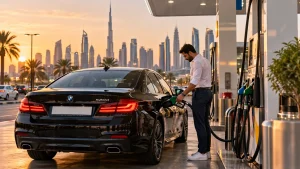
You pull into the station on a Wednesday and realize you were here last Thursday too. Same commute, same car, nothing different about your week and yet the tank is empty again.
That sudden jump in petrol use is more common than most drivers expect, and in Dubai the heat, dust and stop-start traffic all push consumption up. The cause is usually something small, and often cheap to fix.
This guide shows you how to confirm the increase is real, find the cause in the right order, and recognize when it needs a mechanic. And if the tank runs low before you have an answer, fuel delivery in Dubai brings petrol straight to your car so you are never stuck on the road.
The usual causes are low tyre pressure, a dirty air filter, worn spark plugs, a faulty oxygen sensor, heavy AC use, and changes in how or where you drive. Measure your real consumption first, then work through the free checks before the expensive ones.
Step 1: Confirm the Increase Is Real
Before you replace anything, measure, Fill the tank completely and reset the trip meter. Drive normally until the tank is about half empty, then refill and note both the litres and the distance. Divide liters by kilometers and multiply by 100 to get liters per 100 km.
Worked example: 24 liters over 300 km is 8 L/100 km.
Repeat over two or three tanks and compare against your earlier figures. One tank proves nothing — a single long motorway run or a week of heavy traffic can skew it.
Separate Fuel Use From Fuel Price
This trips up more drivers than any mechanical fault.
Measure liters, not dirhams. UAE fuel prices are reset on the first of every month, so a higher price per liter makes a tank feel like it is emptying faster even when your car is burning exactly the same amount of petrol.
If your liters per 100 km have not moved, your car is fine and your bill has simply gone up. For the full picture on what fuel costs and what improves efficiency, read our guide to car fuel consumption in Dubai.
Quick Diagnosis: Match Your Symptom to the Cause
If you have noticed something specific alongside the higher fuel use, start here.
| What You Have Noticed | Most Likely Cause | Where to Start |
|---|---|---|
| Nothing else – just more petrol | Tyre pressure, air filter, driving pattern | Free checks below |
| Weak acceleration, sluggish pull | Clogged air filter | Cheap fixes below |
| Rough idling, hesitation, hard starting | Worn spark plugs | Cheap fixes below |
| Check engine light on | Oxygen sensor or another fault | Diagnostic scan |
| Worse only in summer | AC load | Driving habits below |
| Car pulls to one side, burning smell | Dragging brake or alignment | Mechanic, soon |
| Petrol smell or drips under the car | Possible fuel leak | Stop driving – see the safety section |
The Free Checks: Do These First
None of these costs anything, and together they explain a large share of sudden increases.
1. Tyre Pressure
Under-inflated tyre increase rolling resistance, so the engine works harder for the same distance.
Check when the tyre are cold, against the sticker inside the driver’s door or your owner’s manual — not the maximum figure printed on the sidewall, which is a limit rather than a recommendation. In Dubai’s heat, check in the morning before you drive, because pressure rises as the tyre warm up.
2. Extra Weight and Roof Racks
Clear out anything you are not using from the boot, and take off roof racks and boxes when they are not needed. Roof accessories hurt most at motorway speed, where wind resistance rises sharply.
3. Driving Style and Routes
Hard acceleration, late braking and long idling all raise consumption, even on a perfectly healthy car. So does a change you may not have registered as one: a new commute, a different school run, or roadworks adding ten minutes of crawling traffic. If the increase started the same week something changed about your journey, that is probably your answer.
4. Heavy AC Use
The AC compressor draws power from the engine, and it works hardest in slow traffic. Park in shade where you can, open the windows for the first minute to vent the worst of the heat, then switch to recirculation once the cabin cools. In a UAE summer some seasonal increase is normal and not worth chasing.
The Cheap Fixes: Next in Line
If the free checks did not explain it, these are inexpensive and quick.
5. A Dirty Air Filter
Your engine needs clean air to burn fuel properly, and a restricted filter forces it to work harder. Filters clog quickly here desert dust, construction sites and sandstorms all shorten their life well below the standard service interval. Weak acceleration is the common sign. Filters are inexpensive, so inspect yours at every service and after any sandstorm.
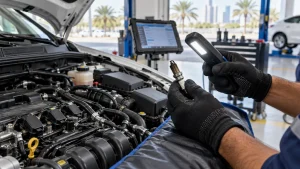
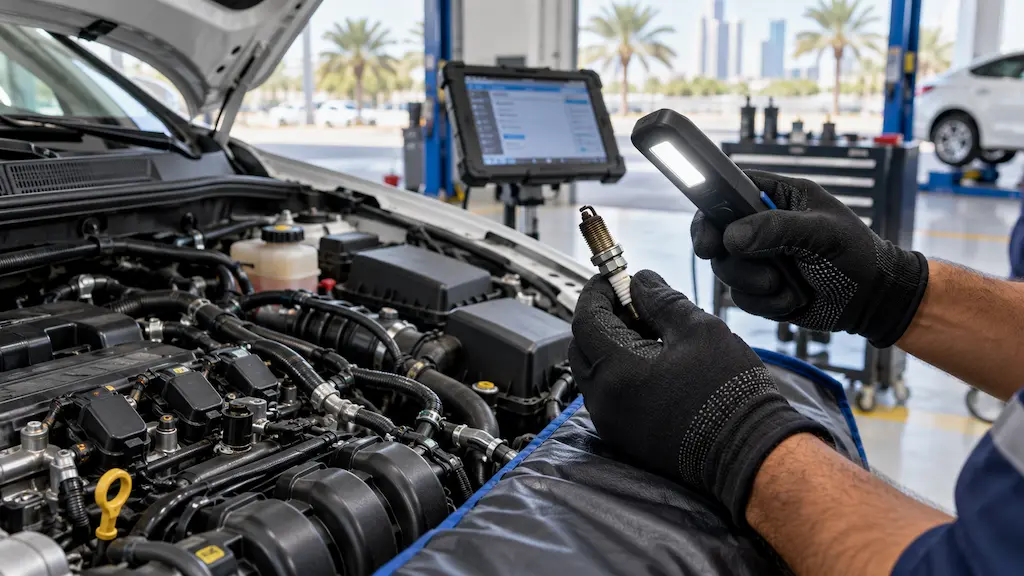
6. Worn Spark Plugs
Worn plugs burn fuel less efficiently. Watch for rough idling, hesitation under acceleration, or the car being harder to start than it used to be. Follow the replacement interval in your owner’s manual rather than a generic figure.
7. The Wrong Fuel Grade
Use the grade specified in your owner’s manual or on the label inside the fuel flap. A lower grade than your engine requires can reduce efficiency, particularly in turbocharged engines. A higher grade than it needs will not improve your mileage, it just costs more per liter. We explain this properly in does premium petrol actually improve your car’s performance, and our guide to the types of petrol in the UAE covers which grade suits which engine.
When It Needs a Mechanic
These cost more to diagnose and fix, which is why they come last.
8. A Faulty Oxygen Sensor
This sensor tells the engine control unit how much fuel to inject. A failing one can leave the engine running rich, burning more petrol than it needs often with no symptom other than your fuel bill. If the check engine light is on, a diagnostic scan is the next step. Guessing at parts is more expensive than the scan.
9. Dragging Brakes or Poor Alignment
A sticking brake caliper or misaligned wheels create constant resistance, so the car is effectively fighting itself. Signs include pulling to one side, a burning smell after driving, or one wheel noticeably hotter than the others. Both also wear out tyres and brakes faster, so these are worth fixing early rather than monitoring.
When Higher Fuel Use Is a Safety Issue
If you smell petrol near the car, or see drips or stains underneath it, stop driving and have it checked immediately. A fuel leak wastes money, but far more importantly it is a fire risk. This is the one item on this page that should not wait for your next service.
Five-Minute Checks Before You Book a Garage
- Check all four tyre, cold, against the pressure on the door sticker
- Make sure the fuel cap seals properly and clicks shut
- Remove extra weight and any unused roof accessories
- Note whether the check engine light is on, and whether it is steady or flashing
- Compare your last service date against the intervals in your manual
- Look underneath the car for drips or stains where you park
What to Do If Your Tank Runs Low Before You Fix It
Higher consumption means the tank empties sooner than you expect, and running dry on a busy road is both stressful and unsafe.
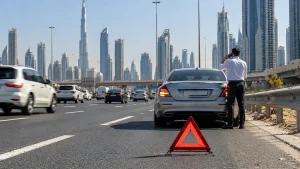
If it happens: pull over as far from traffic as you safely can, switch on your hazard lights, and avoid repeatedly restarting the engine that can draw debris from the bottom of the tank through the fuel system.
Then arrange emergency fuel rather than a tow. Our petrol delivery in Dubai service brings fuel to your location 24/7, anywhere in the city. The service charge is AED 150 plus the fuel price, and all three UAE petrol grades are available.
Frequently Asked Questions
Is Higher Fuel Use in Summer Normal?
Some increase is normal, because the AC works considerably harder. A sharp jump that does not ease as temperatures drop, or one that comes with rough idling or a warning light, needs a proper check.
How Often Should I Check My Air Filter if I Drive Through Sandstorms?
More often than the standard service interval suggests. Inspect it after every sandstorm, and replace it as soon as it looks clogged rather than waiting for the scheduled change.
Will Super 98 Give Me Better Mileage?
Only if your engine is designed for it. Octane rating measures resistance to pre-ignition, not energy content, so a higher grade than your manufacturer specifies costs more without returning more kilometers.
Can I Get Petrol Delivered if I Run Out on a Highway Like Sheikh Zayed Road?
Yes. We cover all areas of Dubai, 24 hours a day. Switch on your hazard lights, move as far from moving traffic as is safe, then call or message us your location.
Could a Faulty Fuel Cap Really Affect My Consumption?
A loose or damaged cap can trigger the check engine light on many cars by allowing vapor to escape the fuel system. It is a two-second check and one of the cheapest things to rule out.
How Long Should I Track My Consumption After a Fix?
Two to three full tanks. A single tank is too easily skewed by one long drive or a week of unusual traffic.
Final Thoughts
When a car suddenly uses more petrol, the cause is usually simple. Measure first and rule out price changes. Work through the free checks tyre, weight, driving pattern, AC before the cheap fixes, and leave sensors and brakes to a mechanic with a diagnostic scanner. Then track your numbers across two or three tanks to confirm the fix actually worked.
And if you run low before you get to the bottom of it, you can book fuel delivery in Dubai and have petrol brought to wherever you are parked.