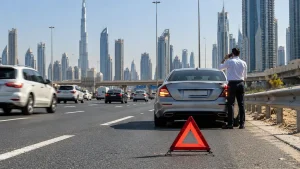
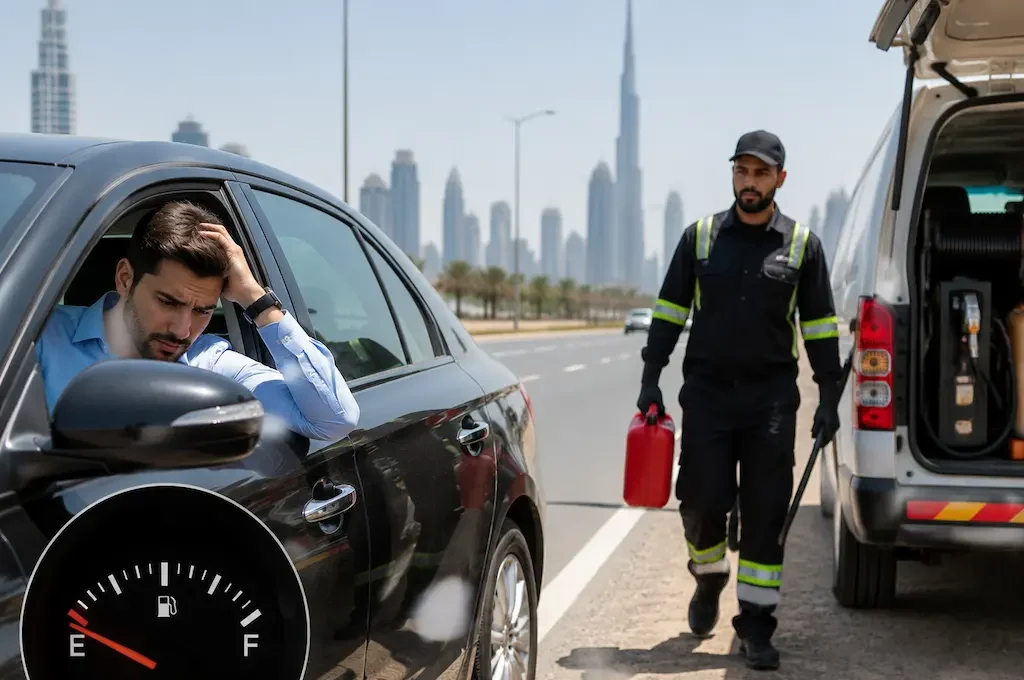
It was 8:40 AM on a Tuesday when Fatima’s sedan sputtered, jerked twice, and rolled to a dead stop in the middle lane of Sheikh Zayed Road. She’d checked the fuel gauge the night before and told herself she’d fill up “on the way to work.” The warning light had come on an hour earlier, but Dubai traffic doesn’t leave much room for detours. By the time she coasted onto the hard shoulder, hazards blinking and horns blaring behind her, she wasn’t just stuck, she was blocking a live lane during peak-hour traffic, with nowhere safe to stand and no station in sight.
Fatima’s story isn’t rare. Our team at Fuel Delivery has handled hundreds of similar calls, cars stalled on flyovers, in mall basements, outside villas at midnight, all for the same reason: an empty tank at the worst possible moment. What separates a stressful ten-minute delay from a dangerous, hours-long ordeal usually comes down to knowing the right steps, and knowing help is a phone call away. That’s exactly why our operations team built this guide from real roadside calls, not guesswork, so you know precisely what to do the next time your fuel light win’s the argument with your schedule.
If you’re reading this while stranded right now, the fastest fix is booking a petrol delivery in Dubai that comes straight to your location, no towing, no pushing your car through traffic, and no waiting at a station queue.
Step 1: Get Off the Road Safely First
Before anything else, your safety matters more than your schedule. If your car is still moving even slightly:
- Signal early and ease onto the shoulder or a side street, never brake hard mid-lane.
- Turn your hazard lights on the moment you sense the engine losing power.
- Steer as far from moving traffic as physically possible, even a few extra meters of curb space helps.
- If you’re on a highway, stay inside the vehicle with your seatbelt on unless it’s unsafe to do so; Dubai’s fast-moving traffic makes standing beside the car risky.
Step 2: Don’t Attempt to Push or Restart Repeatedly
Many drivers panic and try to restart the engine over and over, or attempt to push the car themselves. Both carry real risk. Repeated cranking can strain the starter motor, and pushing a car alone on a live road is far more dangerous than the ten minutes it might save. Once you’re safely stopped, the smarter move is to call for help rather than physically strain the vehicle or yourself.
Step 3: Call for Fuel, Not a Tow Truck
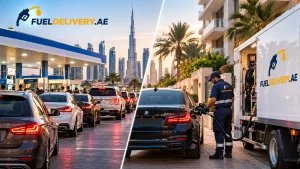
This is the step most people overlook. An empty tank doesn’t mean your car needs a mechanic or a tow, it needs fuel, delivered to exactly where you’re stuck. A dedicated fuel delivery in Dubai service can reach almost any location across the city with approved containers and trained crew, getting you topped up and back on the road without the cost or wait of a full recovery service.
Step 4: Know How Long You Can Actually Wait
Your fuel light doesn’t mean instant failure, there’s usually a buffer window before the tank runs completely dry, and understanding that window can help you plan your next move calmly instead of panicking the second the light appears. We’ve broken this down in detail in our guide on how long you can drive after the fuel warning light comes on?, worth bookmarking before you’re ever in this situation.
Step 5: Check the Delivery Method Is Safe
Not all fuel delivery is equal, and safety should never be an afterthought when petrol is involved. A reliable provider follows approved handling procedures, uses certified containers, and trains its crew specifically for roadside refuelling, whether you’re on a highway shoulder or parked in a residential basement. If you’re unsure what proper protocol looks like, our breakdown on whether emergency fuel delivery is safe? walks through exactly what to expect from a trustworthy operator.
A Quick Recap for Next Time
Running dry doesn’t have to mean a ruined morning or an expensive tow bill. The playbook is simple:
- Pull over safely and switch on your hazards.
- Stay inside the vehicle if you’re near moving traffic.
- Skip the tow truck, call for fuel instead.
- Share your exact location so the crew can reach you fast.
- Get topped up and continue your day.
Fatima was back on Sheikh Zayed Road in under thirty minutes that Tuesday, with nothing more than a phone call and a short wait. The next time your gauge dips into the red, you’ll know exactly what to do.
Frequently Asked Questions
Is it safe to stay inside my car if it stops on the highway?
Yes, generally it’s safer to stay inside with your seatbelt on and hazards flashing than to stand beside a live lane, unless the vehicle is in a position that makes staying inside clearly unsafe.
Can running out of fuel damage my car?
Occasionally, running completely dry can pull sediment into the fuel lines or strain the fuel pump, so it’s best to top up as soon as possible rather than repeatedly restarting the engine.
Do I need a tow truck if I simply run out of petrol?
No, a tow truck is for mechanical issues. An empty tank just needs fuel brought to you, which is faster and cheaper than a full recovery service.
How quickly can fuel actually reach me in Dubai?
Response times vary by location and time of day, but a dedicated mobile provider is built to reach you across the city without the delay of arranging a station visit or recovery vehicle.
What if I’m stuck somewhere unusual, like a basement parking lot or a residential street?
A proper fuel delivery crew is equipped to reach most locations, including basements, villas, and residential parking, not just main roads.
Conclusion
An empty tank is one of the most common reasons cars stall in Dubai, but it’s also one of the easiest to solve, provided you stay safe first and call for the right kind of help. Skip the panic, skip the tow truck, and get fuel brought directly to you instead. With the right service on speed dial, what could be a stressful, hours-long ordeal turns into a short, manageable pause in your day.